
How to Check GCSE Results, Appeal & Plan Next Steps
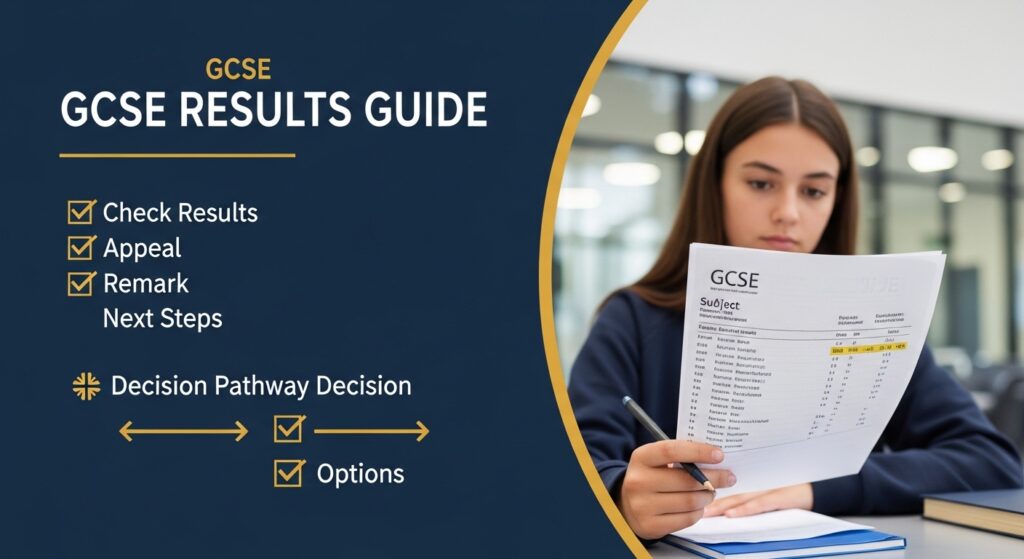
Your GCSE results are in your hands. Now what? Whether your grades are exactly what you hoped for, higher than expected, or lower than you needed, the next few days involve real decisions. This guide covers the full process: how to check your results, what your results slip tells you, when to request a remark, […]
GCSE Results Day 2026: Date, Time & Next Steps

GCSE results day 2026 is almost here. Whether you are a Year 11 student counting down the days or a parent trying to figure out what to expect, this guide walks you through everything. The date, the time, what to bring, what to do if results are better or worse than expected, and what your […]
What Does GCSE Mean? UK Guide to Grades & Subjects 2026

Understanding the GCSE meaning is the starting point for every Year 10 and Year 11 journey. Whether you are a parent trying to support your child or a student wondering what it all leads to, this guide covers everything clearly and practically. What Does GCSE Stand For? GCSE stands for General Certificate of Secondary Education. […]
GCSE Grades Explained for Parents: What Each Grade 9 to 1 Really Means
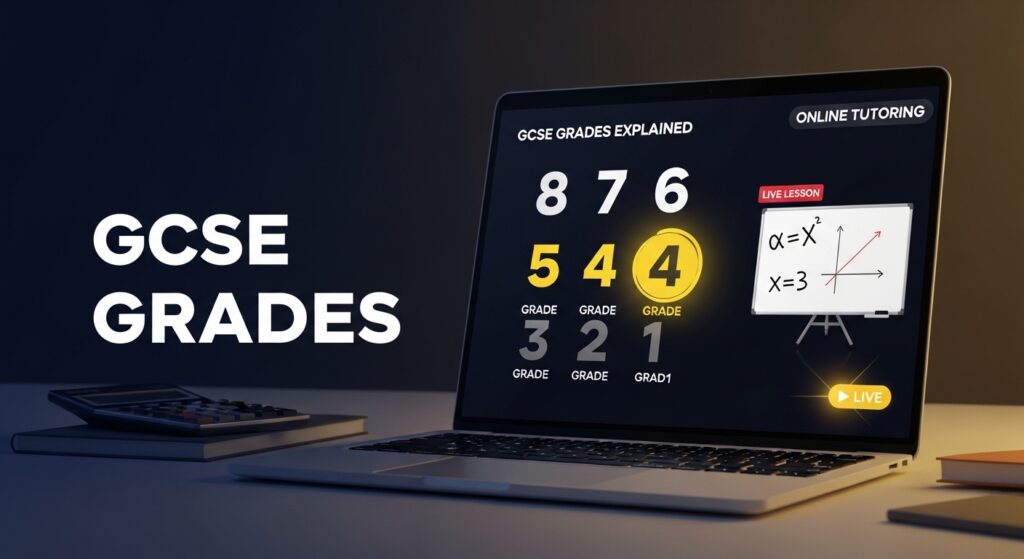
GCSEs in England are graded from 9 to 1, with 9 being the highest. A Grade 4 is considered a “standard pass” and Grade 5 a “strong pass.” Most sixth forms and colleges require at least five Grade 4s or 5s, including English and maths. These grades determine access to A-levels, apprenticeships, and future career […]
Physics Equation Sheet GCSE: How to Use It, What’s Included, and Exam Tips
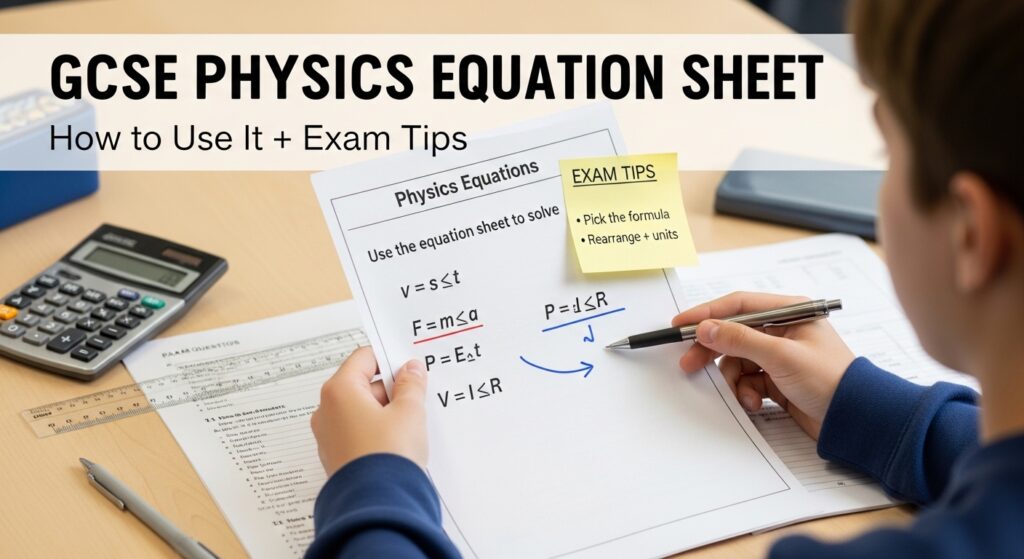
Yes, you get an equation sheet in GCSE Physics exams. It’s printed inside the exam paper for both Foundation and Higher tier students. You don’t need to memorise most equations anymore. But here’s the problem: most students still lose marks on equation questions. They use the wrong equation, forget to rearrange it, mix up units, […]
GCSE Periodic Table (2026): How to Use It, Key Trends, and Exam Questions
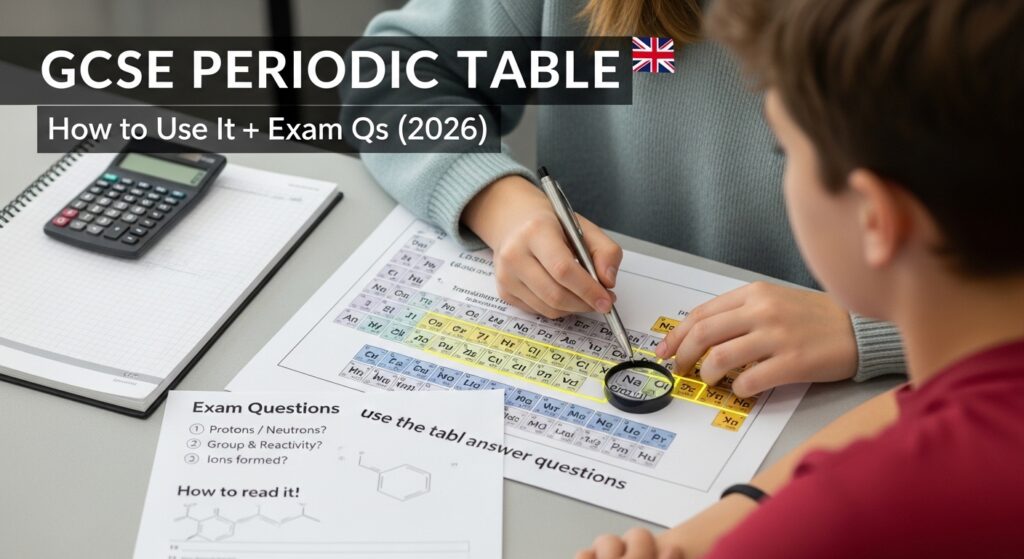
The GCSE periodic table appears in every Chemistry exam. It’s printed on your exam paper. You don’t need to memorise it. But you do need to know how to read it, what the numbers mean, and which trends examiners test. Most students lose marks because they guess instead of using the table systematically. They confuse […]
GCSE Maths Revision: Step-by-Step Guide for Better Grades
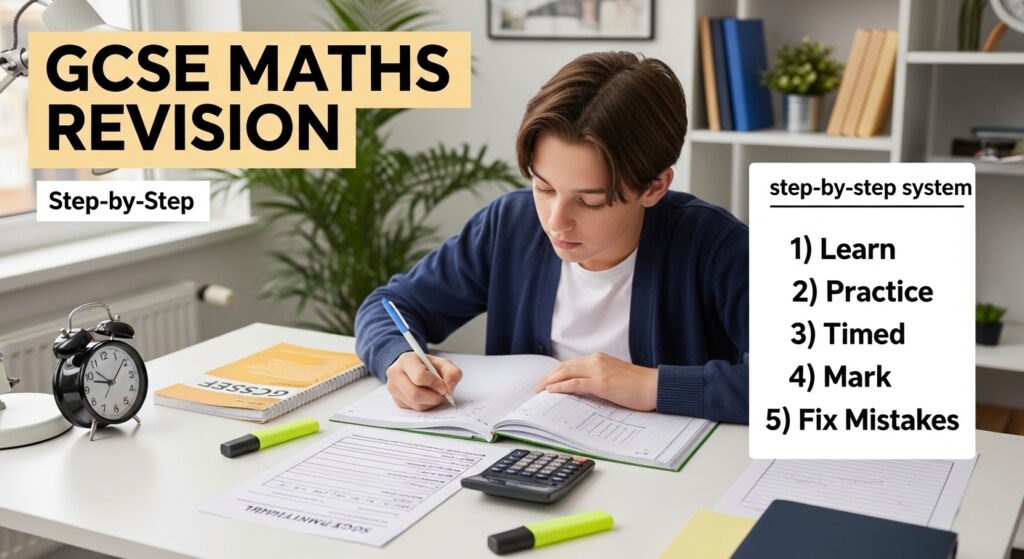
Many students revise for GCSE Maths for hours and still feel unprepared. The issue is not effort. It is how revision is done. Reading notes, watching videos, and doing random questions might feel productive, but they do not fix the mistakes that cost marks in real exams. GCSE Maths revision only works when it is […]
GCSE Maths Resit: Should Your Child Retake or Move On?
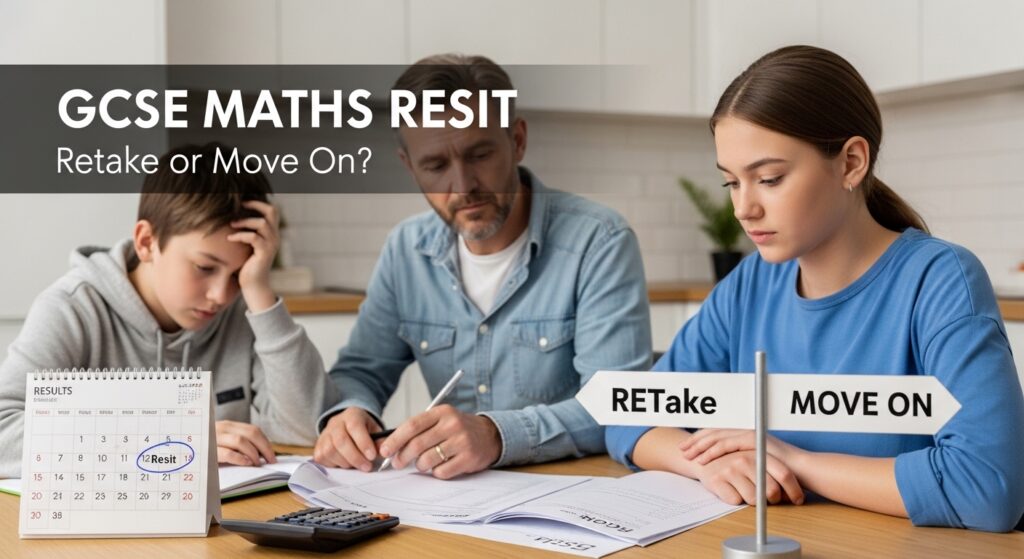
Your child didn’t get the GCSE Maths grade they needed. Now you’re weighing up whether a resit is worth it or whether moving on makes more sense. It’s a stressful decision, especially when college places, apprenticeships, or sixth form progression depend on it. A GCSE Maths resit can open doors that stay closed without a […]
Group vs 1-to-1 GCSE Tutoring: What Works Better in the UK?
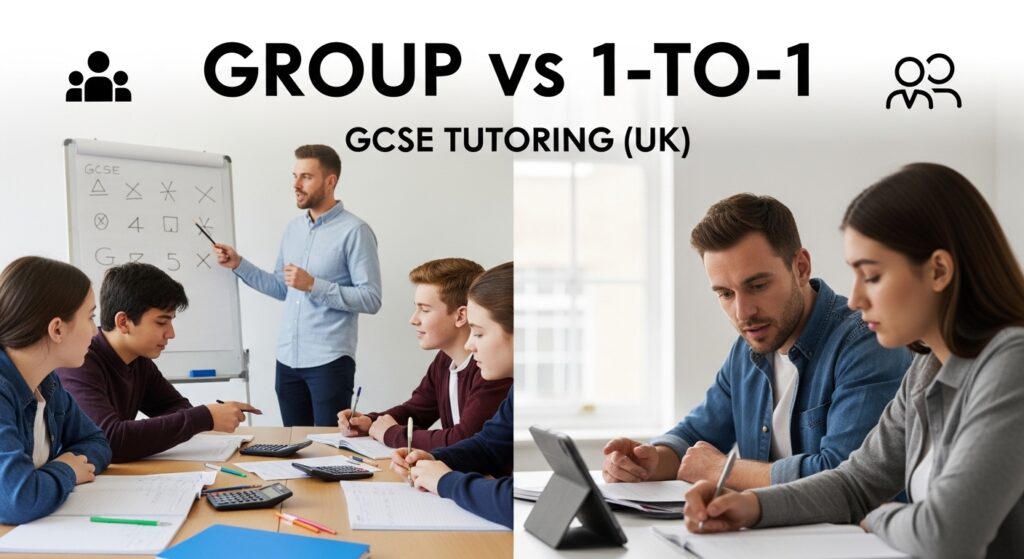
Your child’s GCSE results depend on more than effort. They need feedback on mistakes, timed practice under exam conditions, and someone who spots the patterns in what they’re getting wrong. Group tutoring and 1-to-1 tutoring both claim to deliver this. But they work in completely different ways. One gives your child undivided attention and a […]
Online vs In-Person GCSE Tutoring (2026): Costs, Results & What to Choose
Mock results are back, and it is hard not to worry. Your Year 11 child is still stuck around grade 4s and 5s, even with revision, and GCSE 2026 suddenly feels close. At this stage, most parents ask one simple question: online GCSE tutoring vs in person, which one actually works? The answer depends less […]